Google's Dark Web Monitoring Is Gone. Here's What Your Business Actually Needs Instead.
Our team of experts are dedicated to developing cutting-edge software solutions that provide the ultimate protection for your digital assets
Introduction
Google quietly killed its dark web monitoring feature in early 2026. Scans stopped on January 15. The dashboard was wiped on February 16. No replacement. No migration. Just gone. If you ran a business and relied on Google's tool to watch for employee credential exposure, company email leaks, or domain-level threats — you've been flying blind for months.
The dark web didn't pause when Google did. Breaches kept happening. Credentials kept circulating. Stealer logs kept being posted. The only thing that stopped was your visibility.
This post explains exactly what changed, why Google's tool was never sufficient for business protection in the first place, and what Threat Informant — Shield Tech Hub's dark web monitoring platform — does differently.
What Google's Tool Actually Did (And Didn't Do)
Google's dark web report was built for individual consumers. It scanned a curated set of breach databases for personal identifiers you manually registered: email addresses, phone numbers, home addresses, and SSNs for US users. When it found a match, it sent you an alert.
For a free consumer feature, that was genuinely useful. But the ceiling was low — and for any organization with employees, clients, or business-critical data to protect, that ceiling was reached almost immediately.
Here's what it could not do:
- Monitor your company email domain or employee credentials at scale
- Scan live dark web forums, active marketplaces, or Telegram channels
- Detect stealer malware logs — credential dumps harvested from infected devices
- Provide severity context or actionable intelligence per finding
- Integrate with your security stack or SIEM
- Cover threat actors operating in regions outside Google's source partnerships
For a small business owner in Kigali, Nairobi, or Lagos — or anywhere in Africa — Google's breach database coverage was even thinner. Regional threat actors and locally-sourced credential leaks rarely surfaced in Google's curated sources.
Why This Matters More Than You Think
The biggest risk right now isn't that Google shut down. It's that millions of organizations assumed they had dark web coverage when they never really did.
A one-time scan that comes back clean doesn't mean you're safe. It means nothing matching your identifiers appeared in Google's curated database at that moment. Those are very different statements.
The dark web is not a static archive. It is an active, continuously updated environment where:
- Fresh stealer logs get posted daily — credentials stolen hours ago, already for sale
- Breach compilations get refreshed and redistributed across new forums and markets
- Credential-stuffing toolkits get loaded with the latest leaked databases
- Threat actors pivot between platforms specifically to evade detection
Real protection requires continuous monitoring with broad source coverage — not a recurring scan of the same narrow database. That distinction is what separates knowing you were exposed two years ago from knowing you are exposed right now.
What Threat Informant Does Differently
Threat Informant is Shield Tech Hub's purpose-built dark web monitoring platform, designed from the ground up for organizational and business-level threat intelligence — not individual consumer identity checks.
Source Coverage
Where Google monitored curated breach compilations, Threat Informant continuously scans:
- Active dark web markets and credential-trading forums
- Stealer malware log repositories — the fastest-moving and most operationally dangerous category
- Paste sites and data dump boards
- Telegram channels used by threat actors for distribution and sale
- Traditional breach databases — including sources Google monitored, and significantly more
Organizational and Domain-Level Monitoring
Threat Informant monitors at the level businesses actually need:
- Full company email domain coverage — every @yourdomain.com address, not just the ones you manually registered
- Employee credential exposure across all monitored sources
- Business IP ranges and infrastructure indicators
- Executive and VIP profile monitoring
- Third-party and vendor credential exposure that creates supply chain risk
African Market Context
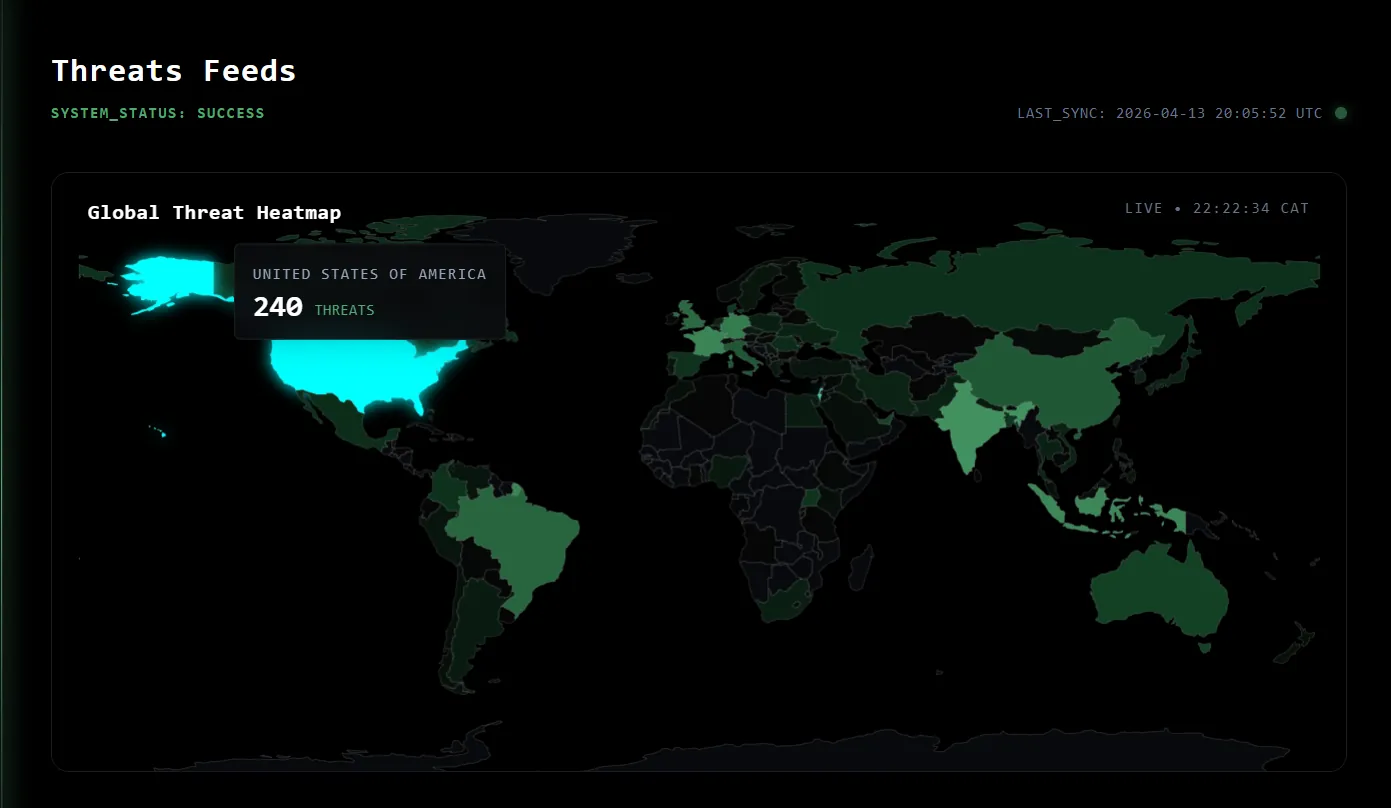
This is a gap no global platform addresses. Shield Tech Hub operates in the East African market. Threat Informant incorporates regional threat intelligence — threat actors, forums, and breach sources that specifically target organizations operating in Rwanda, Kenya, Uganda, and the broader region.
Feature Comparison: Google vs. Threat Informant
| Capability | Google (Discontinued) | Threat Informant |
|---|---|---|
| Status | Shut down Feb 2026 | Active & continuously updated |
| Coverage Scope | Personal identifiers only | Individuals, employees, domains, IP ranges |
| Dark Web Source Depth | Curated breach databases | Live forums, markets, stealer logs, paste sites, Telegram |
| Business / Org Monitoring | None | Full domain-level & employee credential monitoring |
| Stealer Log Intelligence | Not covered | Covered — real-time detection |
| Alert Quality | Basic, limited context | Contextual, severity-ranked, actionable |
| API / Integration | None | Available for enterprise and MSSP clients |
| African Market Context | None | Regional threat intelligence included |
What to Do Right Now
- Run an immediate exposure check. Assume there are findings you haven't seen.
- Treat any previously flagged credentials as still compromised. Google's results history is gone, but the exposure isn't.
- Enforce MFA across all employee accounts. A compromised password with MFA enabled is significantly harder to exploit.
- Replace one-time scans with continuous monitoring. The threat landscape doesn't pause between your quarterly reviews.
The Bottom Line
Google's dark web report served as a useful entry point for individual identity protection. It was never designed for business security — and for organizations operating in Africa, its coverage was limited even by its own standards.
Threat Informant gives your organization the coverage depth, source breadth, and intelligence quality that Google's tool was never built to provide — with regional context that no global platform can match.